

First of all: There is currently (as of October 2024) no bus or marshrutka going directly from Gyumri to the Georgian towns of Akhalkalaki and Akhaltsikhe. Travel forums and guidebooks suggest there is actually one leaving at 10 am and that people at the bus station lie to tourists to make them use more expensive taxis. As for now, this is not true (anymore). After checking with reliable sources in Gyumri it is clear there is no direct marshrutka. There is one from Yerevan, though, but that is hardly worth the detour.
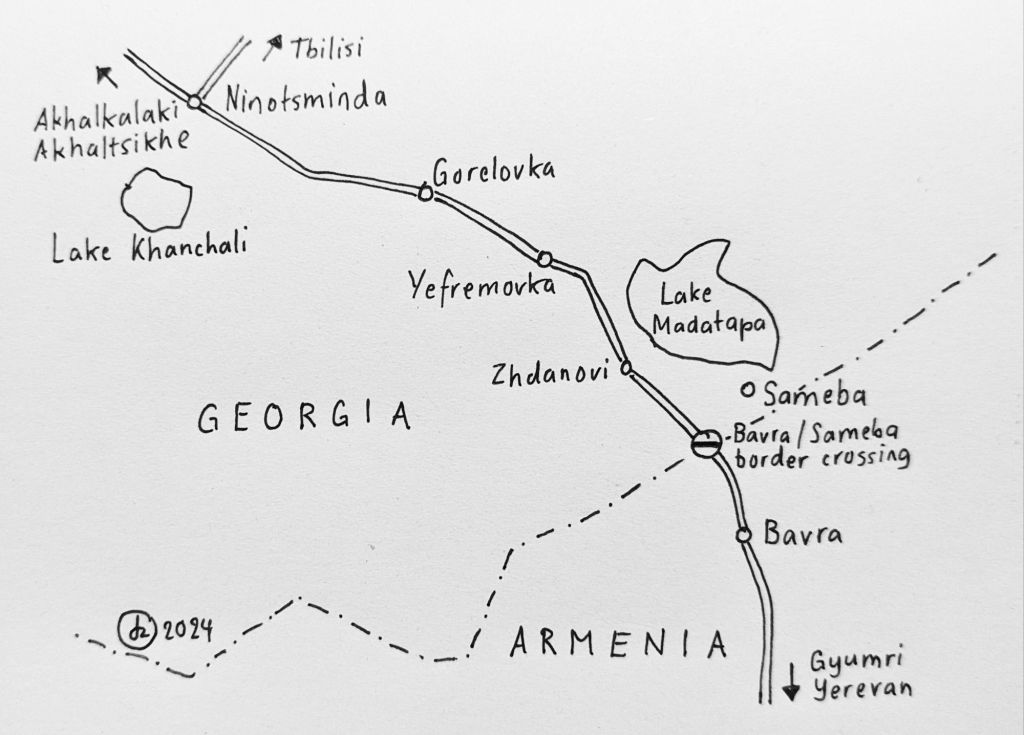
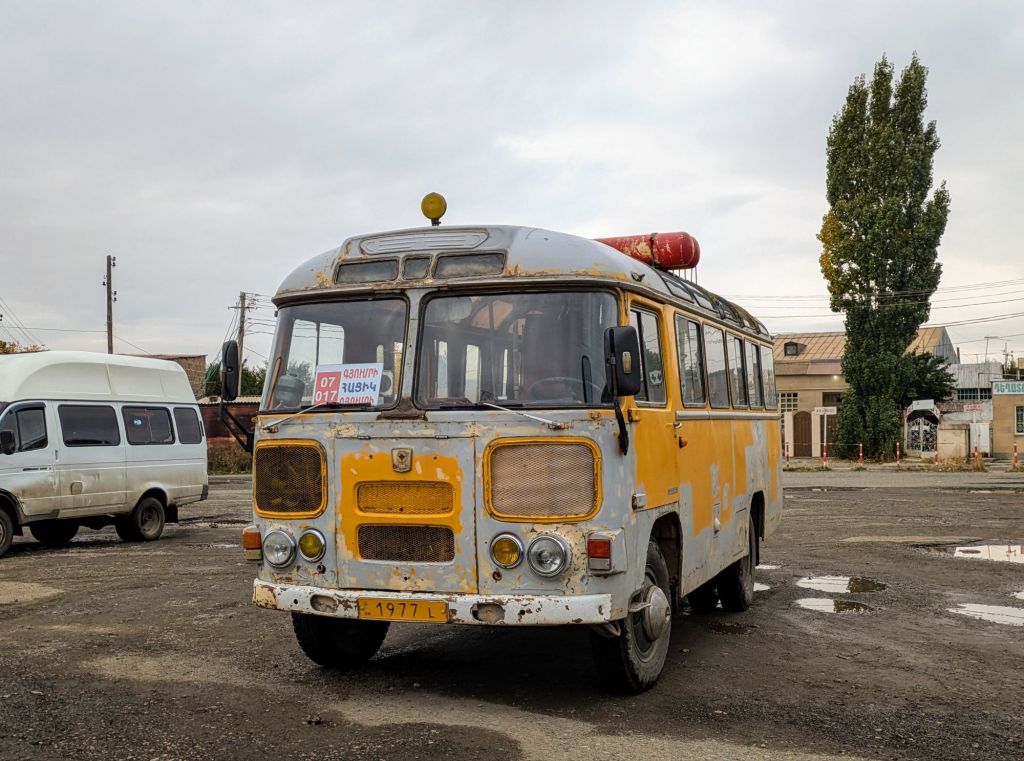
So here is how you still get to Georgia. Obviously, you will need a private transfer. This can be one of the many taxis hanging out at the bus station, which will most likely involve unpleasant haggling. Taxi drivers will have to spend extra money for bureaucracy on the border, hence such a trip is truly more expensive than inland travel. I found using one of Armenia’s Uber equivalents helpful. There are two apps: Yandex Go and GG. Unfortunately, I couldn’t register with Yandex Go, as the text message needed didn’t get through. GG did work, though, but is limited to inland travels.
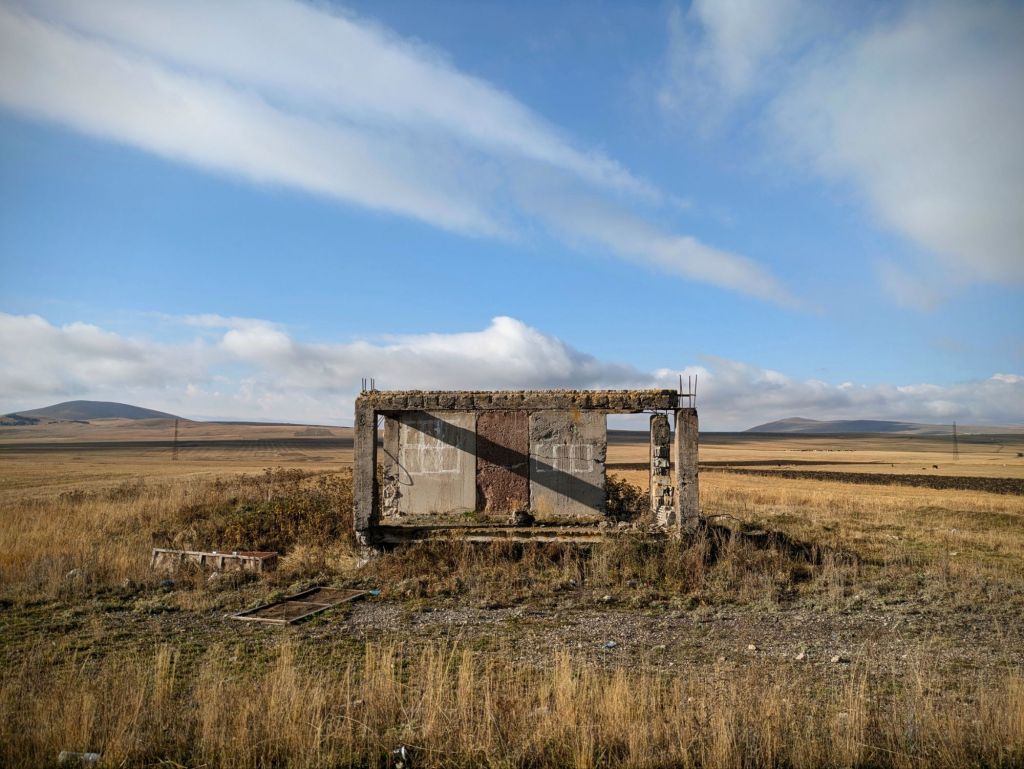
Using a taxi to only up to the border is a good idea anyway, as it does not involve all the bureaucracy needed for cars. So I ordered a GG service to Bavra border crossing, which appeared within five minutes and cost 6500 Dram (ca. 15 €). The ride through barren landscape and remote villages to the border took about 45 minutes.

Crossing the border by foot is as hassle-free as it gets. It is a very remote place and there are few cars. The huge buildings are much disproportionate. Especially the wall-like object on the Georgian side is outright absurd. I was alone at the passport checks and hence proceeded within two minutes.

As there is not much traffic, catching an onward transport can be a bit tricky. I happened to bump into the marshrutka coming from Yerevan at about 9 am, but I didn’t ask if they had available seats. There is no public transport or taxis waiting at the border. But the cars passing by have to stop anyway for the checks and asking for a free seat to the next town (Ninotsminda or Akhalkalaki) won’t be a problem. Another option is Zhdanovi, the next village. Zhdanovi is just 2 km away and while walking through it, I was even offered a ride without asking for it. That’s how the locals travel here.

I was so impressed by the landscape that I opted for walking, though. The Bavra/Sameba border crossing sits on a high plateau at 2000 m above sea level. Mostly grassland with some hillls and lakes, it reminds of Mongolia or Kyrgyzstan. There is a nature sanctuary around Lake Madatapa, right after the border crossing. Quite surprisingly, there is even a set of marked hiking trails around the lakes, rather unhelpfully advertised on the backside of a traffic sign after Zhdanovi village, though.

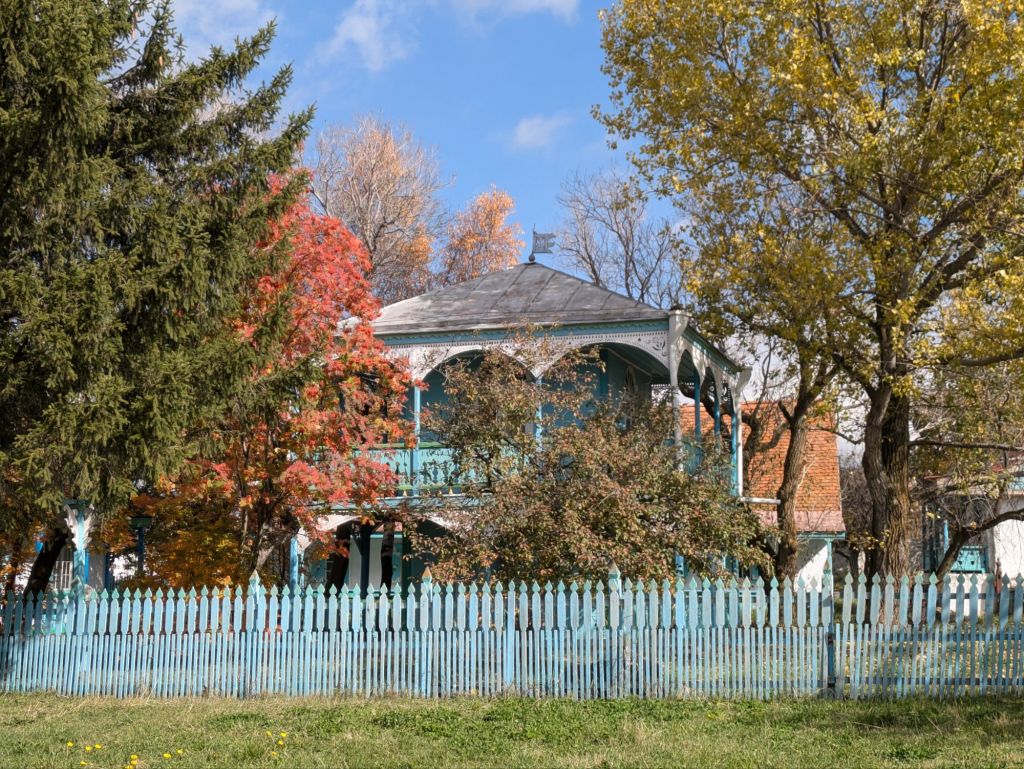
The remote area on the Georgian side of the border used to be populated by the Dukhobors, a religious minority exiled from Russia in 1841. Architecture in the villages makes this rather evident, featuring colourful wooden log cabins instead of the stone brick buildings typical elsewhere in the region. Also the villages’ names sound rather Russian: I passed by Yevremovka, Gorlovka and Orlovka. After the collapse of the Soviet Union, most Dukhobors left the area, so many villages now look poor and semi-deserted.

I walked all the way up to Gorelovka to see the prime example of Dukhobor architecture, the orphanage – which is in a surprisingly good condition and open to the (non-existent) public. In Gorelovka, I hailed down a car for the remaining 11 km to Ninotsminda. No problem at all, I wasn’t alone flagging down cars at the speedbump in downtown Gorelovka.
Ninotsminda, the district capital, is the first town after the border and also the first town reached by public transport. There are marshrutki to Tbilisi and Akhaltsikhe via Akhalkalaki, but not too many. The last marshrutka to Akhatsikhe leaves at 1 pm! After the departure of the Dukhobors, Ninotsminda district is 95% Armenian populated, many shops have bilingual signs. Ninotsminda means Saint Nina, the patron saint of Georgia, which is a peculiar choice for a place where so few Georgians live. Until 1991, it went by its Dukhobor name, Bogdanovka.

Almost on the road to Akhaltsikhe is the cave town of Vardzia, the most famous sight of Samtskhe-Javakheti province. Since the weather was good and I felt like spending time in nature, I spontaneously decided to go there. To get there, I left the Akhaltsikhe-bound marshrutka at Khertvisi (whose fortress is a sight for itself). Vardzia is 16 km up a side valley, there are ca. 6 daily marshrutkas serving it. As I didn’t expect one to turn up soon, I again flagged down a car and was picked up by some tourists in a rental car. From Vardzia, the last marshrutka down to Akhaltsikhe leaves already at 3 pm, so I decided to stay overnight, which was absolutely worth it. The cave town site is impressive, but even more so the valley in autumn colors. Even though it can be crowded with tourists (not in autumn, however), I totally recommend it.

 Passport Party
Danke, very helpful guide for crossing the border. Beautiful photos!
LikeLike